REMTON




REMTON Mentorship Framework
Overall Goal
To empower students by bridging the gap between potential and opportunity through mentorship, career guidance, and life skills development.
1. Program Structure
Tiers of Mentorship
Foundation Mentorship (High School Focus)
• Academic support, study skills, discipline, personal growth.
• Exposure to career options and values.
Career Readiness Mentorship (University Focus)
• Career exploration, employability skills, entrepreneurship training.
• Networking with professionals and internship opportunities.
Leadership & Innovation Mentorship (Advanced Level)
• Research projects, innovation labs, business incubation.
• Developing future leaders and change-makers.
2. Core Objectives
• Academic Excellence – Help students develop effective study and research habits.
• Career Awareness & Preparation – Guide students to align strengths with future careers.
• Personal Development – Build character, discipline, resilience, and leadership.
• Professional Skills – Train in digital literacy, communication, and workplace readiness.
• Social Responsibility – Instill values of service, empathy, and community building.
3. Key Mentorship Types & Activities
A. Academic Mentorship
• High School: Study skills workshops, subject guidance, exam prep, scholarship support.
• University: Research skills, thesis support, academic writing workshops.
B. Career Mentorship
• Career fairs & guest lectures from industry professionals.
• CV/resume clinics and mock interviews.
• Internship placement support.
C. Personal Development Mentorship
• Leadership bootcamps.
• Confidence and public speaking sessions.
• Time management & goal-setting workshops.
D. Professional & Technical Skills Mentorship
• Digital literacy (coding, design, data).
• Entrepreneurship workshops (business idea development, pitching).
• Financial literacy training.
E. Peer & Alumni Mentorship
• Peer-to-peer mentoring groups.
• Alumni-student networking events.
• Job shadowing opportunities.
F. Life Transition Mentorship
• High School → University: Adjustment, course selection, independence.
• University → Workforce: Workplace culture, professional ethics, transition planning.
4. Program Delivery Methods
• One-on-One Mentorship (personalized guidance).
• Group Mentorship Sessions (common challenges, workshops).
• Online Mentorship Platforms (virtual mentorship, webinars, e-learning).
• Mentorship Clubs in schools/universities.
5. Timelines & Phases
Phase 1 (0–3 months): Foundation
• Recruit and train mentors.
• Identify partner schools/universities.
• Conduct needs assessment of students.
Phase 2 (3–6 months): Implementation
• Start pilot mentorship sessions.
• Launch career development workshops.
• Set up peer-mentorship clubs.
Phase 3 (6–12 months): Expansion
• Partner with industries for internships.
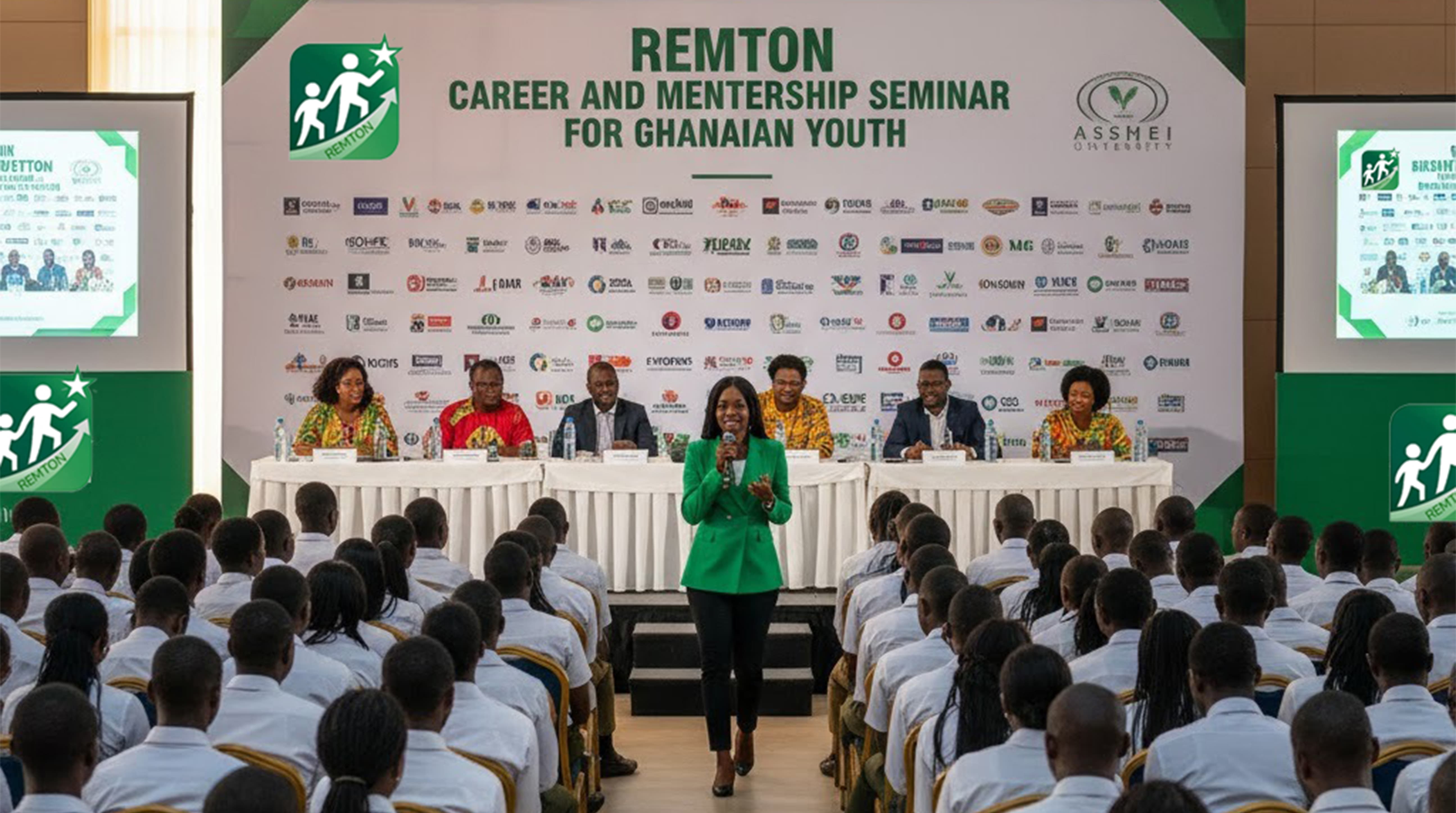
• Organize annual career & mentorship summit.
• Monitor and evaluate impact.
6. Roles of Mentors
• Academic Mentor – Helps with studies and learning strategies.
• Career Mentor – Guides career exploration and preparation.
• Life Mentor – Builds values, confidence, and resilience.
• Professional Mentor – Provides real-world industry insights.
7. Monitoring & Evaluation
• Pre- and post-program surveys to measure growth.
• Academic performance tracking (for high school).
• Internship/job placement tracking (for university).
• Regular mentor-mentee feedback sessions.
8. Expected Outcomes
• Improved academic performance.
• Better career readiness and employability.
• Increased confidence, discipline, and leadership.
• Students are equipped with digital, financial, and entrepreneurial skills.
• Stronger school-to-university-to-career transition.
REMTON Yearly Calender
Quarter 1: Foundation & Orientation
January – Orientation & Goal Setting
• Launch mentorship program (introductory seminar).
• Orientation for mentors & mentees.
• Goal-setting workshop: personal, academic, and career goals.
• Icebreaker & team-building activities.
February – Academic Excellence Month
• Study skills & exam preparation workshop.
• Time management strategies.
• Peer study circles established.
• Scholarship & university admission guidance (for high schoolers).
March – Personal Development Month
• Confidence-building & public speaking training.
• Leadership bootcamp (basic leadership skills).
• Personality and strengths assessment sessions.
Quarter 2: Career Awareness & Exploration
April – Career Discovery Month
• Career talks by professionals from different industries.
• Career interest surveys and one-on-one career mapping.
• Workplace visits/job shadowing (where possible).
May – Digital & Professional Skills
• Digital literacy workshops (coding, design, or data basics).
• Resume/CV writing and LinkedIn profile clinic.
• Mock interviews & workplace etiquette training.
June – Financial Literacy & Entrepreneurship
• Workshops on money management (budgeting, saving, investing).
• Entrepreneurship bootcamp – idea generation & business basics.
• Pitching competition for innovative student ideas.
Quarter 3: Leadership, Service & Innovation
July – Social Impact & Service
• Community service project (students volunteer as a group).
• Mentorship on empathy, responsibility & giving back.
• Reflection session on lessons learned from service.
August – Leadership Development
• Advanced leadership training (conflict resolution, team management).
• Panel discussion with youth leaders & alumni.
• Launch “Student Leadership Challenge” (projects run by students).
September – Innovation & Research
• Research and innovation mentorship workshops.
• Tech/innovation fair where students showcase projects.
• Guest lectures from entrepreneurs & innovators.
Quarter 4: Transition & Celebration
October – Life Transitions
• High school focus: transitioning into university (course selection, adjusting to independence).
• University focus: workplace readiness, ethics, and professionalism.
• Alumni mentoring circles (alumni share real experiences).
November – Networking & Industry Linkages
• Career fair with industry partners.
• Internship placement drive for university students.
• Networking sessions with professionals and recruiters.
December – Reflection & Graduation
• End-of-year mentorship conference/summit.
• Award ceremony (best mentees, mentors, projects).
• Reflection & evaluation: mentee progress, mentor feedback.
• Planning session for the next year.
Program Delivery Notes
• Weekly/bi-weekly mentor–mentee sessions (1-on-1 or small groups).
• Monthly workshops/seminars as per themes above.
• Quarterly summits/fairs for larger networking and impact events.
Reach Out to Us!